🎧 Building the Dream: My Journey to a World-Class Mixing and Mastering Studio
studio upgrade
mixing and mastering
acoustic treatment
decoupled studio
low frequency treatment
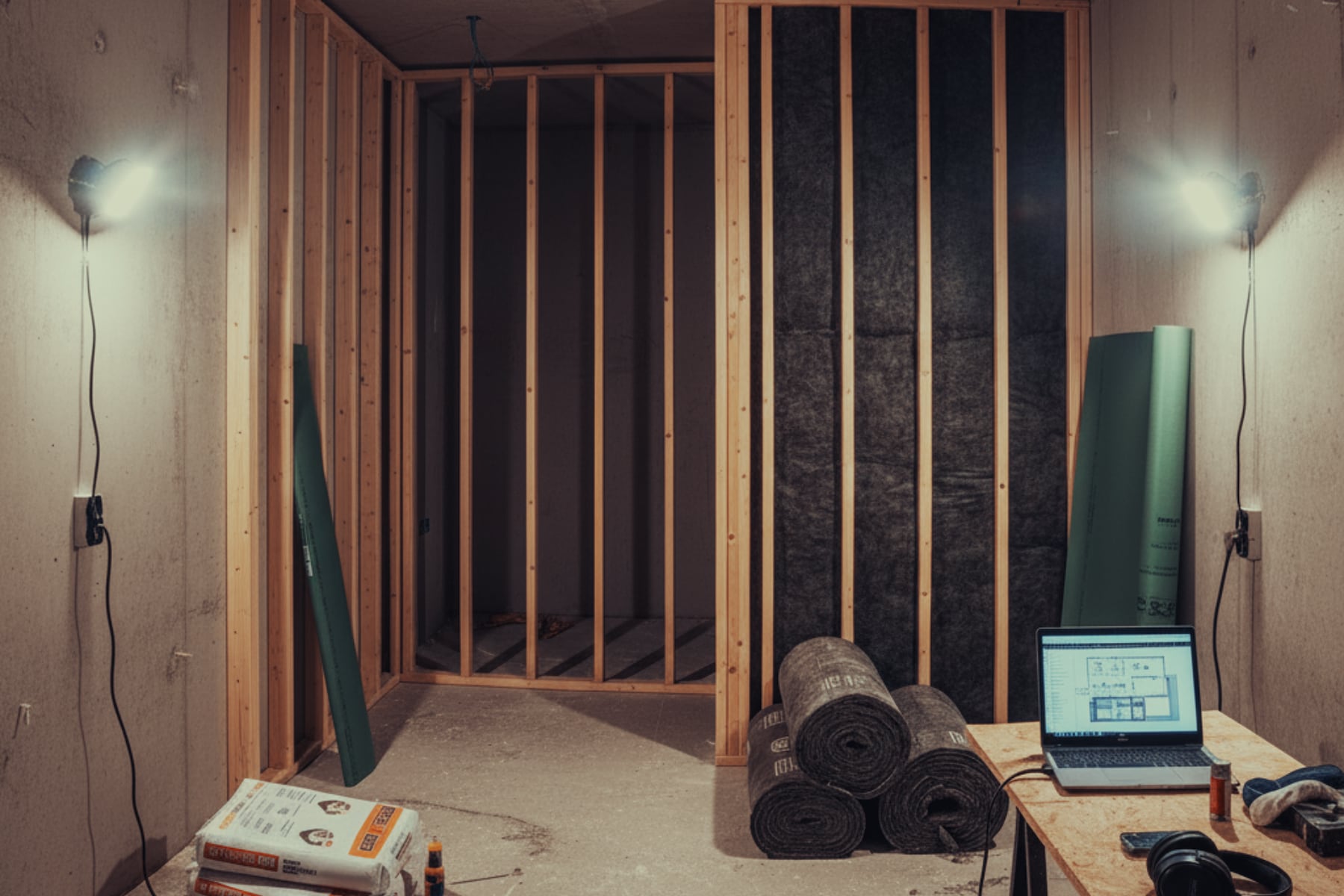
For the past couple of months, my life has been a deep dive into blueprints, acoustic principles, and material science. Why? I'm embarking on a massive studio upgrade to create a world-class environment for mixing, mastering, and the intricate tracking work that defines my career.
As an independent artist freelancing globally—handling everything from custom flute recordings and sound design to full orchestral film score work—my studio isn't just a workspace; it's a critical tool. This new space must be supreme in every metric: acoustics, environment, and equipment.
This journey has taken me down the rabbit hole, consulting with top acousticians and devouring every tutorial. Now, I'm ready to share the core principles guiding this ambitious build.
🛠️ Phase 1: The Acoustic Foundation—Decoupled and Precise
The single most crucial step in achieving a world-class sound is absolute acoustic isolation.
1. The Decoupled Floating Studio
My new studio will be an independent structure inside the existing concrete room—a decoupled floating studio. This means the new walls, floor, and ceiling will not touch the main building structure, eliminating unwanted vibrational interference.
The Gap: A crucial air gap will exist between the concrete shell and the studio structure, which will be densely packed to manage external noise and internal reflections.
Mass-Air-Mass Resonance: This is the first technical hurdle. I am meticulously calculating the mass, stiffness, and air gap dimensions to ensure that I eradicate low-frequency mass-air-mass resonances, a common issue that colors the sound in smaller spaces.
2. Taming the Beast: Low Frequencies
Since I rely on a high-quality Genelec subwoofer, the treatment of low and low-mid frequencies (the sub-80Hz range) is non-negotiable. These frequencies are the primary culprits behind muddy, inaccurate mixes. A successful mix translates everywhere only if the bass is true.
The design focuses heavily on trapping and diffusing these problematic frequencies to provide the most accurate low-end response possible.
💻 Phase 2: The Monitoring Truth—Powered by Technology
A great acoustic space deserves great monitoring and the intelligence to fine-tune it.
Genelec GLM Software
A vital component of my new monitoring system is the integration of the Genelec GLM (Genelec Loudspeaker Manager) software. This system is not just room correction; it's a sophisticated acoustic optimization tool that will:
Soften the Curve: Create a flatter, more neutral frequency response curve within the listening environment.
Time and Phase Alignment: Critically, GLM ensures perfect timing and phase alignment between all speakers (and the subwoofer), which is essential for accurate stereo and spatial imaging.
The Inner Studio Treatment
While tackling the low-end, I must avoid creating a "dead" or "dull" studio. The internal acoustic fixtures (absorption, diffusion, and reflection points) will be carefully balanced to provide an environment that is accurate, yet still lively enough to inspire. The goal is simple: hear the absolute truth of the recording. This accuracy is the cornerstone of a fast, confident, and highly translatable workflow.
🚀 Phase 3: Embracing the Future—Spatial Audio
The way the world consumes audio is changing rapidly. While monitors remain paramount, we live in a headphone-centric world where spatial audio is becoming the new normal.
The Spatial Challenge
My existing studio already handles spatial audio mixing (Dolby Atmos and 7.1), but this new build is being fully optimized for it. We are entering the age of Spatial Audio 2.0, and the studio must be future-proofed to handle the complexity and precision required for immersive mixing across all formats.
🚧 Countdown to Launch
The investment in time, research, and materials is substantial, but I believe this upgrade is critical to taking my sonic standard many notches higher.
The work has already begun. Materials are on order, and I'm constantly collaborating with the acousticians, all while juggling my daily recording schedule. It's challenging, but I'm determined to enjoy every step of this process!
I anticipate the new studio will be operational within a month's time. Stay tuned—I will be sharing the first pictures and a full gear list on the website soon! Get ready for some world-class sound!
As an independent artist freelancing globally—handling everything from custom flute recordings and sound design to full orchestral film score work—my studio isn't just a workspace; it's a critical tool. This new space must be supreme in every metric: acoustics, environment, and equipment.
This journey has taken me down the rabbit hole, consulting with top acousticians and devouring every tutorial. Now, I'm ready to share the core principles guiding this ambitious build.
🛠️ Phase 1: The Acoustic Foundation—Decoupled and Precise
The single most crucial step in achieving a world-class sound is absolute acoustic isolation.
1. The Decoupled Floating Studio
My new studio will be an independent structure inside the existing concrete room—a decoupled floating studio. This means the new walls, floor, and ceiling will not touch the main building structure, eliminating unwanted vibrational interference.
The Gap: A crucial air gap will exist between the concrete shell and the studio structure, which will be densely packed to manage external noise and internal reflections.
Mass-Air-Mass Resonance: This is the first technical hurdle. I am meticulously calculating the mass, stiffness, and air gap dimensions to ensure that I eradicate low-frequency mass-air-mass resonances, a common issue that colors the sound in smaller spaces.
2. Taming the Beast: Low Frequencies
Since I rely on a high-quality Genelec subwoofer, the treatment of low and low-mid frequencies (the sub-80Hz range) is non-negotiable. These frequencies are the primary culprits behind muddy, inaccurate mixes. A successful mix translates everywhere only if the bass is true.
The design focuses heavily on trapping and diffusing these problematic frequencies to provide the most accurate low-end response possible.
💻 Phase 2: The Monitoring Truth—Powered by Technology
A great acoustic space deserves great monitoring and the intelligence to fine-tune it.
Genelec GLM Software
A vital component of my new monitoring system is the integration of the Genelec GLM (Genelec Loudspeaker Manager) software. This system is not just room correction; it's a sophisticated acoustic optimization tool that will:
Soften the Curve: Create a flatter, more neutral frequency response curve within the listening environment.
Time and Phase Alignment: Critically, GLM ensures perfect timing and phase alignment between all speakers (and the subwoofer), which is essential for accurate stereo and spatial imaging.
The Inner Studio Treatment
While tackling the low-end, I must avoid creating a "dead" or "dull" studio. The internal acoustic fixtures (absorption, diffusion, and reflection points) will be carefully balanced to provide an environment that is accurate, yet still lively enough to inspire. The goal is simple: hear the absolute truth of the recording. This accuracy is the cornerstone of a fast, confident, and highly translatable workflow.
🚀 Phase 3: Embracing the Future—Spatial Audio
The way the world consumes audio is changing rapidly. While monitors remain paramount, we live in a headphone-centric world where spatial audio is becoming the new normal.
The Spatial Challenge
My existing studio already handles spatial audio mixing (Dolby Atmos and 7.1), but this new build is being fully optimized for it. We are entering the age of Spatial Audio 2.0, and the studio must be future-proofed to handle the complexity and precision required for immersive mixing across all formats.
🚧 Countdown to Launch
The investment in time, research, and materials is substantial, but I believe this upgrade is critical to taking my sonic standard many notches higher.
The work has already begun. Materials are on order, and I'm constantly collaborating with the acousticians, all while juggling my daily recording schedule. It's challenging, but I'm determined to enjoy every step of this process!
I anticipate the new studio will be operational within a month's time. Stay tuned—I will be sharing the first pictures and a full gear list on the website soon! Get ready for some world-class sound!